Blog

Brașov, Romania and Heart of Stone

As somebody who signed up for maybe the most tourist-trap trip ever created (that being Halloween at Vampire Castle in Vampireland, Earth), I was compelled to go all-in with the American cheesiness and choose a vampire novel to read throughout my Romanian vacation. Might as well, right? If you sign up with an American tour group company featuring a very American-themed Hollywood trope, it’s going to be an unbelievably American-centric trip. You know who goes to Dracula’s castle on Halloween? Americans, Australians, Canadians, and people of the UK. It does make me wonder if there’s anything like that in the US; that being a Holliday or location that Americans don’t even care about, but tourists from one specific country come just to see it.

My travels through Romania were not authentically Romanian, but things are very rarely ever authentic when you’re a tourist, no matter how many barefoot bloggers lead you to believe otherwise. I went with a group because I hate driving and Romania is nothing but driving. This was the first time traveling in a big tour group and it will likely be my last, but new experiences are always interesting, even if said experience is a consistently drunk Tennessee woman burping behind you on the bus and one-upping her friend to the extent of it just being funny to listen to (Oh, did you just say you have a friend name Nicole? I have a friend named Nicole too and she’s a well-known painter. What does your friend Nicole do?).

The beauty of a bus is that you can put on noise-cancelling headphones and listen to music via Romania’s wildly and surprisingly strong cell reception (seriously, half the time I’m in Maine my phone doesn’t work, but here in an ocean of trees and mountains my phone blasts five bars as long as we stay on the main road), while trying not to throw up on windy curves so that you can continue to read the gay-vampire romance you brought with you.

Johannes T. Evan’s Heart of Stone was Victorian-themed, cute, and a perfect slow-burn for a five-hour snail-slow traffic trip. There’s no better place to mood-read than a foggy morning in a bus going through a mountain pass, where people used to use it as a chokehold to rob people in the medieval ages (as well as occasionally impale them), and listen to the very areas of legend that inspired the European vampire myth and, by extension, Bram Stoker’s Dracula. Only, I didn’t want to read about Dracula, as I’ve read it before and I was far more in the mood for fluff and light-heartedness.

Romania’s a country with a brutal past and an awe-striking landscape; Evan’s book was a balm to all the long tales of subjugation, lumber mafia, communist dictators, and earthquake disasters. With every impaling, forest-siren, and starvation story I learned about, I could breathe in with a scene regarding the inherit sexual tension of neck biting or joint office file organization. I loved Evan’s writing and I look forward to reading more from them in the future, though I do wish they’d hire a better cover artist. Still, they are clearly an amazing self-editor or they hired a very talented one because, for a self-published piece, Evan’s novel was only a few buffs shy of a fully polished novel. I look forward to reading more from Evan in the future. They’re the perfect companion to headache-long car rides.

Highlights of the Trip:

1. Fat gas station dogs

2. Extremely beautiful forests

3. Slamming food

4. Pretty much all of it. I had a lot of fun!

Oxford, England and Jude the Obscure

Truth be told, I only read three chapters of Thomas Hardy’s Jude the Obscure while in England and instead finished a very light-hearted book (T.J. Klune’s Under the Whispering Door), but I get to make the rules on my own blog, and Tom Hardy is a better fit for the city. The novel is a dense and depressing read. However, I’ve been obsessed with this app called Serial Reader, which delivers 10-20 minute sections of a classic a day and it makes these tomes of classics much more manageable and less intimidating than holding up a four-hundred page classic with size 9 font. It took me almost an entire month to read, but it was well-worth it even, if some sections are obnoxious between Sue and Jude (oh Sue! You sexless spirit. Oh Jude! You long suffering saint). That’s one of Tom Hardy’s talents though, for the protagonists of this story are extremely unlikable, but you still feel bad for them and want things to work out.

I can see why Jude the Obscure was scandalous and not well received in its time, for it heavy handedly criticises the Christian sanctity of marriage and the prestigious godliness of universities. It takes bravery to pick at societally dominant institutions like that, particularly for an established author who injured his reputation in a similar way to his most sympathetic character in the Novel, Mr. Phillotson (having a hot young wife just isn’t worth it), by bringing up what might be deemed societally wrong, but morally correct. This is a novel that destroys its characters for wanting to live outside of convention; which makes it a tragedy on par with Dickens or Shakespeare.

I don’t know enough about Thomas Hardy’s life if the city of Christminster is directly based on Oxford, but it might as well be. As a huge university nerd, I adored my time in college but have since come to recognize that universities are not beacons of pure knowledge but also profit-greedy businesses. Seriously, imagine any other thing in your life where you spend a hundred grand to acquire it and they then send you letters asking for donations? The healthcare system is a mess, but at least they aren’t asking for an additional donations post-surgery.

The American University is very different from the British ones though. Had this been an American novel, Jude would have instead been readily accepted into one of the lesser funded universities on the outskirts of Christminster and then looked down upon by the old ivy universities in town and consequently drowned in debt-poverty. American universities don’t have gates. They are laid out like large bear traps enticing anybody inside, its lawn green greedy for money green.

Oxford has gates.

It is a beautiful stone city packed with institutions, but most of it is hard to see from the street, for the university buildings are walled nearly everywhere and, if you are to take a peek, it can only be done by standing on your tippy toes and jumping to glance the rooves and upper windows on the other side before falling back to the sidewalk. I can understand how Jude must have felt with only a wall separating him from his dreams, and yet what a thick and tall wall. He spends his life as a stone mason, chipping away and carving, but he never breaks through to the other side. He’s Sisyphus with a wall that grows thicker as he bevels.

Oxford was just as closed to me as it was to him, since every gate was locked and whenever one could go in, it was behind a paywall (apart from the Natural History museum, which was as impressive as it was made up of stolen finds). Even the Thames was section off behind gates and backyards. This surprised me, living along the Rhine, which has miles of open walkway for anybody to travel from town to town. I had wanted to walk the Thames; what I found instead were small parks that just barely skirted it and were hard to get into, for even they had walls with only a few access points.

So much of the city is hidden. You can see C.S. Lewis’ love for wardrobes and how one small door can lead to an entire world of marvel, if only one can locate it. You can see Tolkien’s laborious journey of twists and turns in the spider cave, only to be blocked by a bridge guarded with a statue-esque monster, saying you cannot pass. And, like Tolkien’s ending to the Trilogy, only the birds can freely travel the city.

Oxford is beautiful in its exclusivity, don’t get me wrong, but it is still exclusive.

Berlin, Germany and Unlikely Animals

Having spent eleven hours on a train in one weekend, I was lucky to have downloaded such a perfect light-read to keep me entertained on my journey criss-cross country. Hartnett’s Unlikely Animals is a contender for one of my top ten books of the year, for Hartnett does a pristine job at blending humor with sorrow, the absurd with the believable, and produces a cast of likeable and memorable characters. She speaks on the Opioid crisis in a human and non-preachy manner, as well as tells of the desperation that families feel when faced with illness in a country and healthcare system that does not support them. It is a book as charming as it is nostalgic. The sort of story that makes me homesick and I don’t get homesick often. It’s only when I read about autumnal New England, with its maple candy, apple orchards, stone walls, and covered bridges, that I think about returning home.

Even if said home is currently a shitshow of forced birth, anti-trans propaganda, mass shootings, and fascist incels.

It does tend to dim the leaf-peeping beauty of New England when I hear how terrible so many people’s lives are in the US and how very useless I feel across the ocean and removed from all that. Perhaps that’s why I was so determined to go all the way to Berlin last weekend. I wanted to go to some sort of LGBTQ+ event, though these parades are always shamelessly mass-marketed and are more about selling products/brands than caring about the actual people taking part in them. That’s capitalism for you, though. Corporations care about LGBTQ+ rights for as long as it means being trendy and turning a profit. As soon as things fall out of favour, they’re out. Still, they’re an expected annoyance at this point, for a lot of these companies do help to fund the parades and this was a giant parade, turning up hundreds of thousands of people a year.

That’s important.

People need to be loud and show up in droves and shame these hateful regressionists who are trying so hard to take away the rights of people. Who care so deeply that people outside of their ultra-specific world view might exist and dare to be happy. Who honestly believe that queerness showed up all of thirty-ish years ago with the invention of the internet and the McRib. And who pretend that queer history doesn’t exist, even though so much of it was targeted and destroyed or was censored by biased historians.

I met up with a friend in Berlin and we did a lot of walking with a lot of people. People who were kicked out for being themselves, who were young and searching for their identity, who were older and deep in a community, and those who were vibrant and alive and unapologetic. We waved flags, we danced, we avoided the handful of perverts who always attend these parades (seriously, the fetishist clubs have way more respect than these loner losers who walk with their dicks out), and we got blisters.

I remembered the pride parade I’d gone to in Boston, years ago. Where somebody had broken out from their group and had run up and asked to hug me, all the while complimenting my outfit and flag colors I’d chosen. Who’d seen me. I remembered how I had hugged them back and felt so accepted by them, so unconditionally loved even though I’d tried to blend into the back of crowd, that I think that started the acceptance I felt towards myself. How maybe I wasn’t cold-hearted for my lack of wanting to date or crush or marry, but instead that I just wanted to live a life without a romantic partner. That maybe I was actually very feeling and warm to the people I care for, even when society screamed and yelled that I was a loser because I didn’t want marriage. That maybe it was okay to like being on my own and to not be ashamed that I valued my independence above a husband or a child. Maybe I wasn’t selfish or broken or, God forbid, innocent (drives me fucking insane, that last label) for wanting to be single. Maybe it was okay to be a little off the norm, a little queer.

I was very lucky to have been born when I was, despite all the fuckers screaming that they want things back on the straight and narrow again, because if I’d been born just a hundred years ago, if I’d been forced to marry and have children, I think I would have killed myself. I really do. I think I would have been one of those women deemed insane who walked into a river with rocks in their pockets.

That’s what they don’t get, they say Pride is a sin.

They don’t know that there’s definitions of Pride outside of religion.

Pride is about having the dignity to live one’s own life.

I don’t even care if these religious fascists judge me and pray for my eternal damnation for my existence and tell themselves that I’m secretly unhappy, so long as they don’t take away my right to live the way I choose. Because nobody should have the right to control another. They have a right to sigh and be a bigot and say they don’t understand how people can lead such empty, childless and selfish lives, but they don’t have the right to stop me.

It should be said that, before the rise of the Nazis, Germany had been in one of their most progressive booms in their history. There were breakthroughs in trans-research and queer history, all of which was the first thing burned by the Nazis, all of those people killed or fled or sent to death camps. It’s something that I’m sure many people thought about at Pride in Berlin. How important it is to be loud and present. To be unapologetic. To walk over the same paths that the fascists marched and tread over their steps, person after person (in heels, in combat boots, in platform shoes), forever stamping down atop them that – no, you did not get rid of us. No, we are still here and we always will be.

We’ll march atop your steps.

Dresden, Germany and Dead Blondes and Bad Mothers

I’d just finished Cal Flyn’s Islands of Abandonment before this trip and, in many ways, the novel would have been a better fit for my time in Dresden. Even after thirty years, you can still see the imprint that the Soviet Union has left on the city. There’s the post-war mass construction block apartments, the pockets of caved-in abandoned buildings, and the clean yet vaguely clinical look of the Kulturpalast. You can tell that it’s a city of industry, though not industry in the sense of shiny tech or colossal banking giants. Rather, it’s the over-grown grass storage container fields of construction, shipping, and factory working. It’s funny how cities that build are often closest to nature, since there’s trees and vines creeping into everything on Dresden’s outskirts, where workers have much more to focus on than lawn care.

I spent three days in Dresden, ten hours of which consisted of a train ride across the heartland of Germany. It left me with plenty of time for reading and I finished Sady Doyle’s Dead Blondes and Bad Mothers halfway through my return trip back to Frankfurt. Doyle’s thoughtful analysis of the Horror transcends a commentary on trope and instead presents itself as a well-researched and often times inspiring collection of feminist essays. I love an essay collection that can somehow surprise me with a new instance of sexism in everyday life. It creates a short burst of rage that almost delights me, because I remember that I’m not as entirely jaded as I present myself as. It’s a great book. Any chapter could be lovingly selected, photocopied at a weird angle, and mass stapled in a stack of handouts for a class of highschoolers to dissect.

Trying to relate the book to Dresden, however, was difficult. I don’t know enough about Dresden’s history with FemLit or social movements to make any deep or meaningful tie-ins. However, as Doyle’s book did go deep into the stain of the Patriarchy on Western civilization, I did find myself thinking quite a bit about its role on the city.

Naturally, elements of the Patriarchy are in every monument you see in Europe, with Dresden being no exception. You can see it in Dresden’s looming statues of great (and often terrible) men built by men and for men, in the procession of all-male rulers on the Fürstenzug wall (where the only women on the mural sits hunched with the children in the corner), and most notably in the plaza of the Frauenkirche (or, Our Lady church. No, not The Lady, but rather Our Lady), where a giant statue of Martin Luther stands before her with his head raised proudly to heaven, as though telling God ‘Yes, I have hammered and nailed my decree upon her door. I have told her exactly what we want Our Religion and Our Women to be.’

Sexism bleeds into art, into buildings, and into the very soul of these old cities. There are plenty of images of women throughout Dresden, don’t get me wrong, but they are not real women. They’re symbols and concepts given form, posed with a neat tit out for the grasping hand of a child and their bodies plump with prosperity. They decorate, they adorn, and they support the monuments. They smile and look coy. They aren’t anybody; they’re merely the ideal that some man thought to carve in place of a pillar.

This isn’t to call out Dresden in particular. As an American, it really isn’t my place to condemn the use of statues, not when the US can’t take down monuments to confederates without having an all-out war about it. Dresden merely had the bad luck of being the city I read FemLit in.

It’s also a city that was destroyed because of the ambitions of Patriarchal leaders. It’s also a city that still struggles with an Alt-Right presence, up until this day.

And yet, about an hour outside of this industrial city is a nature park, which I visited on my second day there. You have to ride a train forty minutes past block housing, then abandoned housing, then garden colonies, and take a ferry to reach it (mine had a mother duck sitting in a nest at the bow), but its unmistakably beautiful. The nature park is far from untouched by man or truly wild, but still it is growing and reclaiming everything that was carved out from it.

The Bastei once held a mountain castle that is now little more than some pick-axe marks in rocks. Even the bridge and its hundreds of steps are moss-laden and overgrown. Nature is reclaiming what was built, the way that Mother Nature always does. No matter how enterprising or industrial a city might be, nature claws, roots, and climbs her way in. She breaks the windows of old abandoned factories. She cracks apart pavement, no matter how deep we try to bury her.

She grows, no matter how much man tries to shadow her.

She’s always there, clawing back.

Barcelona, Spain and Dead Collections

Isaac Fellman is quickly becoming an author where I’m just going to read anything that he comes out with. I read The Breath of the Sun earlier this year and I knew I’d have to pick up Dead Collections once it came out. In The Breath of the Sun fashion, I bought Dead Collections expecting a fantasy novel about vampires that worked in a magical, never-ending archival labyrinth in the base of a cursed library. I was surprised when it was instead about a modern-day, middle-aged trans-vamp struggling with housing insecurity. While not what I expected, I still loved it. Fellman has an amazing talent for stepping into a story whenever it gets too stressful and whispering to the reader that it will end okay, so they can go ahead and enjoy the ride now. With the world and work being a mess of stress lately, I sort of wish somebody would do that for my everyday life.

For now, I’ll have to settle for a book.

One wouldn’t think Barcelona would match the tone of this story, but Dead Collections seems to have brought cosy weather with it. Off season in Barcelona is quieter and, while still a party city, I’m not a partier so I never saw that side of it. I walked instead. I brought the story where I went, unfolding the plot over the early morning flight, an empty night at the beach with waves crashing uncomfortably close, at the base of the unfinished Sagrada Familia, in a café themed after a fairy forest, on a bench in the sleepy blue corner of the shark tank at the aquarium, and at a bench up in the mountains. I finished it when a swell of rain came in, bunkered under a tree in a park that housed a fountain full of mercury. It felt right to finish it at the height of the sun, but only once a storm had come in and blotted it out.

It was a breath of cold, damp air. By the time I finished it, my Docs had torn my heels apart. I loved the story. I also felt incredibly called out by the fanfiction elements and wanted to throw it off the cliffside due to the embarrassment of having been too seen. I read it alone, but it felt very much like Fellman was behind me whispering ‘I know your fanfic past.’

Seriously though, read the book.

Best Books of 2021

Another year has passed and it is time for the roundup for 2021. I made it a goal this year to only read books that interested me and to not view the star rating until the book was over. This was a bad habit I used to have and I’m glad to have mostly gotten over it. Next year, my goal is to find a Goodreads alternative and not worry too much about meeting a minimum read goal.

Here are my top five books.

1. The Twenty Days of Turin – Giorgio de Maria

2. The Archive of Alternate Endings – Lindsey Drager

3. Fever Dream – Samantha Schweblin

4. Eat the Buddha – Barbara Demick

5. Earthlings – Sayaka Murata

Lyon, France and the Kangaroo Notebook

It didn’t rain the weekend I spent in Lyon, though it had all the trappings of it – grey, chilled, and wet cold air. The sun set early enough for me to see it was truly Fall, which I hadn’t noticed much before, having been so burnt out by overtime and work. October is a break month for me. It’s the month where all that overtime and stress comes to an abrupt end and suddenly my workload goes down from 12 hours days to 2. I’m dazed for the first few weeks of October, busy trying to remember what I was interested in before the overtime season hit and how my life isn’t actually all about work and spreadsheets.

Abe’s The Kangaroo Notebook was a good match to the fizzled, numb feeling of early October.

It has a surreal, Kafka-light feel to it and Abe will casually introduce child demons, a vampire award, and a radish-growing medical predicament without ever explaining why. Much like the nameless protagonist, I trekked around Lyon by going from one scene to another, without really knowing where I’d end up. I took breaks between museums and endless, hour long walks to stop and read my tattered used copy – by the river, on a park bench, or draped over the weird futuristic hotel chair at night. I walked for three days straight, until my heel bled and I took breaks just long enough to stretch out my legs and get my bearings. It made me wish for the telekinetically controlled hospital bed that the protagonist rode on – or, at the very least, that I should have downloaded the app for the electronic scooters around town.

Though for a city that is mostly stairs and tight passageways, I’m not sure how well something wheeled would have helped anyways.

My trip was spent in episodes, laid out like the book in small micro-worlds inside a large city. There was,

– The modern Movie Prop & Miniature Museum tucked into the Renaissance section of the old city, where I opened a side room and was suddenly face to face with the ten-foot tall alien from Alien, chains and all. And me thinking, this is a city that once killed protestants and endless others for demon worship, but now tucked into one of their old buildings is an alien queen that I paid money to see. While outside the church bells rang and people ate ice cream despite the cold.

– A group of military police pooling out of a van at the Basilica of Notre-Dame de Fourvière, only for them to wait outside while one of their lot went into the church store and came out beaming with a souvenir bag and her gun slung over her shoulder.

– Me, accidently unlighting somebody else’s prayer candle in the church while trying to light my own. I paid ten cents instead of the required 2 euro though – I thought, sort of rude, why should God care about the difference between a dime and two dollars, when humans invented currency.

– Having to wait for a group of schoolchildren to finish their gym class run in the park, then getting startled by the screaming of monkeys. Only to looks over and see there was a zoo with giraffes, flamingos, and a stray black cat.

– Going to the modern art museum that only featured women artists and realizing that I’d never seen that done before, despite all the museums I’d been to. And then, when confronted by a hallway lit by red glowing light, thinking, man, women sure love scary shit in art.

– My inability to match the restaurant hours of French culture and starving at five pm by the river while searching for the first restaurant I could find that was both open and had seats available. Then, eventually giving up and buying a Euro sandwich from a convenience store to hold me over until eight. I ate it in the middle of the park between an Antivax gathering and a dog group meetup. Surprisingly, the antivax idiots caused less of a problem for me despite their shouting, as it was a dog that came up and took half my sandwich from me while I took a break from eating it to read. It was all for the best. The sandwich was bad. Probably, it was a sin to eat a cheap meal in a city known for cuisine, but when you’re starving you don’t really care.

I realize now, I felt guiltier about buying a cheap meal in France than skimping the church on a tithing.

Bonn, Germany and the Twenty Days of Turin

There’s an aspect of solo travel that subconsciously ties whatever you’re reading at the time to the context of your trip. With nobody else to talk to, you naturally think about what you’re reading. It’s strange. Years after I read a book, I might entirely forget what happened in the novel but I always remember the context in which I read it. There’s plenty of books that I’ve read that I couldn’t name any of the characters or plot points, but I’ll forever associate the idea of beach or DMV or hungover to how I felt while reading it.

Thus, the Twenty Days of Turin will be linked in perpetuity with the two days I spent in Bonn, Germany. It’s a book that takes place in Turin, Italy and I read it in the birthplace of Beethoven. As far as I’m aware, there’s no connection between Turin and Beethoven, but these two have somehow become linked. I read the book in museums about music, on a hike up Drachenfalls, and sitting in an old hunting lodge in the middle of a forest. For the latter location, I was sweaty and the gnats joined me as I lunched there, probably because I’d come from climbing a slug-covered mountain and smelled quite delicious to them. I finished the book drinking beer and watching the rain rolling in over the valley and thinking about Covid, which is still in the air and mutating but we try to think it might still dissipate and leave us with a sunny, stress-free valley someday soon.

I didn’t know it then, but those very rains would lead to the death of over a hundred Germans a week later, for the valley some twenty miles off would suffer from one of the worst floods Germany had seen in a century. And there I was watching the distant rains with my chin in my hand and the book sat atop a beer ring stain, hoping to God the restaurant took credit.

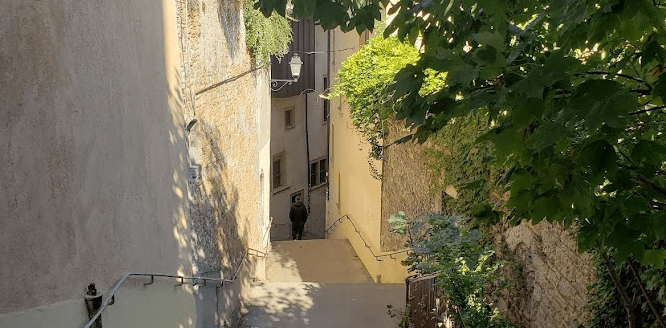
As for Bonn, it is a pretty little city right along the Rhine. The train to get there follows valleys and vineyards up the coast and there is something very lonely and isolated about the towns that dot the river. They’re squeezed up against the shore and can only cut back two to five streets until the incline is too sharp to continue to build. Bonn managed a city due to its being in a valley dip, but the town I went to for the hike, Koenigswinter, fell into that cramped town model. I read a dirty old plaque that said Koenigswinter used to be a tourist spot with donkeys, casinos, and that a dragon had once lived in the mountains. Now, they sell antiques in Sunday market fair with their church bells going and their recently re-opened shop fronts are repainted. I walked through it with my backpack up into the woods, until the town disappeared entirely and there was only forest with slugs and snails, the smell of rain, and the clanging church bell far below.

I thought about it a lot on that hike, but there isn’t really a theme that connects the book to Bonn, except maybe one feeling I got at the Modern Art Museum. They had a room in an exhibit called Sound and Silence that you could walk in alone and you’d turn the corner, only to see utter darkness. The walls were lined with black foam that absorbed all light and you faced a hallway which gave no indication into how far it went. There was a speaker overhead whispering ASMR-esque sounds and I stepped forward into utter darkness, only to glance over my shoulder and see the lighted corner. Yet the more I stepped, the more the darkness surrounded me, until I was blind and walked with my hands out, my palms bumping into the soft foam wall and the speaker mouthing sounds like I was in their throat. It was a sudden blindness I wasn’t expecting and I was alone with only strange sounds. But if I just looked over my shoulder, there was the light and the exit. There was the hand sanitizer unceremoniously placed at the entrance that was near empty from all the use. There was the fountain outside that created an ever-changing maze with walls of water, that families took turns running through and a twenty-something sat on a van and sketched them as they screamed with delight when suddenly shot through with a jet of water.

And I thought, this is summer. I could still feel the hand sanitizer dried to my hands and I watched the rain come that night, happy that it would help me sleep and unaware that the rivers were rising all the time and soon, so very soon, that the water would spill over.

Bernard

Maybe it’s because I live in Europe, but lately I’ve been thinking about the kinds of drawers that you find in apothecaries. That wall of mini wooden drawers, so neat and stacked and compact that you can open them with a single hooked finger. And in those drawers, I’ve been picturing all the people that I know. I think about these friends and family stretched out across the world who I see very little of, if at all.  I imagine myself looking in on them, from time to time, but ultimately not knowing what goes on when I close them back into their respective boxes. Sometimes I might catch whispers and snippets of their lives, but ultimately I’ve left them be.

In one of those drawers, my grandfather died.

I’ve stayed up late, mostly thinking of how little I’d talked to him in the past year. How my mom had told me months ago that he was getting increasingly hard to get a hold of and that he wasn’t returning her calls. I thought of how he’d been in good spirits after beating cancer, years ago, and how we suspected it had probably returned. That the news had crushed him, made him secretive, and drawn him inward. And there he was, filed far away, all the way in Florida during a pandemic when we had no vaccines and he was too old and risky to visit. I don’t have any idea what he’d been through or dealt with all those months on his own. He lived independently up until they found him, where he’d been nonresponsive on the floor for hours. A medical emergency right by a busy beach and on a sunny main road with cars going past all the time, then him in his apartment alone. Tucked neatly behind four walls.

We told him to keep a phone on him at all times, just in case. He told us he was invincible.

He weighed 130 pounds when he died.

The last time I’d seen him, some summer three years ago, he’d been eating a four-pound lobster on a Cape Cod pier, surrounded by seagulls, plastic menus, and sunburns. Then he’d gone south to follow his horses and I’d moved away, and he lived in that little compartment in my mind, still full-on seafood and his single Bud light. In all that time, I hadn’t opened that drawer. I’d wanted to keep that image of the seaside and him happy, for no benefit but for my own.

I’m not traveling home for the funeral. Everyone’s so old and high-risk that we’re going to do it virtually. Instead, I’m filling up that little drawer with things that remind me of him, until I can stuff it closed and lock it neatly shut. I want to press my mind to it and hear hoof beats and smell cigars. For there to be whisky, gold teeth, fluoride, the crusty poodle-dog, feathered fedoras, smoking jackets, cats, the big piano that nobody but him could play, and that sweet and sweaty smell of the horse track. Of people calling him Doc and Barney and soldier and father. And me little and running up the stairs of his brown split level on all fours because they were so steep, then jumping up at the top to meet him in the kitchen. The room warm and the porch door open with the green forest bright behind it and the sound of splashing in their pool. And me panting from all that running around outside, then turning to him and shouting, grampy guess what, guess what.

And him saying, what, what, what.

Best Books of 2020

2020 is officially over. Overall, it was a very nondescript year. I can’t think of a single world-shattering event that occurred.

So here is my top ten favorite books of 2020, which are ranked in no particular order. For some reason, I had plenty of time to read this year. It was almost like I was unable to do anything else with my time.

1. The Memory Police – Yoko Ogawa

2. Bunny – Mona Awad

3. The Power – Naomi Alderman

4. The Bass Rock – Evie Wyld

5. King Leopold’s Ghost – Adam Hochschild

6. The Blue Girl – Laurie Foos

7. The Shapeless Unease: A Year of Not Sleeping – Samantha Harvey

8. Minor Mage – T. Kingfisher

9. The Second Coming of the KKK – Linda Gordon

10. Apeirogon – Colum McCann

Happy reading!